Beet Hummus Recipe
Beet hummus is a colorful and nutrient-packed twist on traditional hummus that combines cooked beets with chickpeas, tahini, and lemon juice.

The beets give this dip a naturally sweet, earthy taste and a striking pink color that makes it a standout on any table. Whether you’re spreading it on sandwiches or serving it with vegetables and pita, beet hummus adds something different to your usual rotation.

What Are Some Historical Facts About Beets?
Beets have been around for thousands of years. Ancient civilizations like the Greeks and Romans grew them primarily for their leaves, not the root. It wasn’t until later in history that the root gained popularity, especially in Europe. By the 19th century, beets were used to extract sugar, which led to the development of sugar beet farming across Europe and North America. Today, both the leaves and roots are used in various dishes across the world.

Why Are They Called Beets?
The word “beet” comes from the Latin word beta, which referred to the plant in ancient times. Over time, as languages evolved, it became “bete” in Old English and eventually “beet” in modern English. The root’s distinct bulb shape and deep red hue have kept the name attached to it ever since.

Why Are Beets Considered A Superfood?
Beets are often labeled a superfood because they are packed with essential nutrients. They’re a strong source of folate, potassium, iron, and fiber. Beets also contain compounds called nitrates, which are linked to better blood flow and lower blood pressure. Their antioxidant content, especially betalains, helps reduce inflammation and support overall health.

How Soon After Eating Beets Is Urine Red?
If you’ve ever noticed red or pink urine after eating beets, you’re not alone—it’s a condition known as beeturia. This usually happens within a few hours of eating beets and is completely harmless.
Storage Instructions
Store beet hummus in an airtight container in the refrigerator for up to 5 days. If the hummus begins to dry out, stir in a small splash of olive oil or lemon juice before serving. For longer storage, you can freeze it for up to 2 months. Thaw in the fridge overnight and stir well before using.
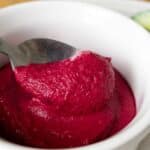
Beet Hummus Recipe
Ingredients
- 1 small roasted beet
- 1 15-ounce can cooked chickpeas, mostly drained (each can yields about 1¾ cups)
- Zest of 1 large lemon
- Juice of ½ large lemon
- Pinch of salt and black pepper more to taste
- 2 large garlic cloves minced
- 2 heaping tablespoons tahini
- ¼ cup extra virgin olive oil
Instructions
- Roast a beet according to your preferred method. Let it cool completely, then peel off the skin.
- Cut the beet into quarters and place in a food processor. Blend until only small bits remain.
- Add the chickpeas, lemon zest, lemon juice, salt, pepper, garlic, and tahini to the processor. Blend until the mixture is smooth.
- While the hummus is blending, slowly drizzle in the olive oil until fully incorporated.
- Taste and adjust seasonings—add more salt, lemon juice, or olive oil as needed. If the hummus seems too thick, blend in a tablespoon or two of water until you reach your desired consistency.
- Transfer to an airtight container and refrigerate. The beet hummus will keep in the fridge for up to one week.