
Blackberries
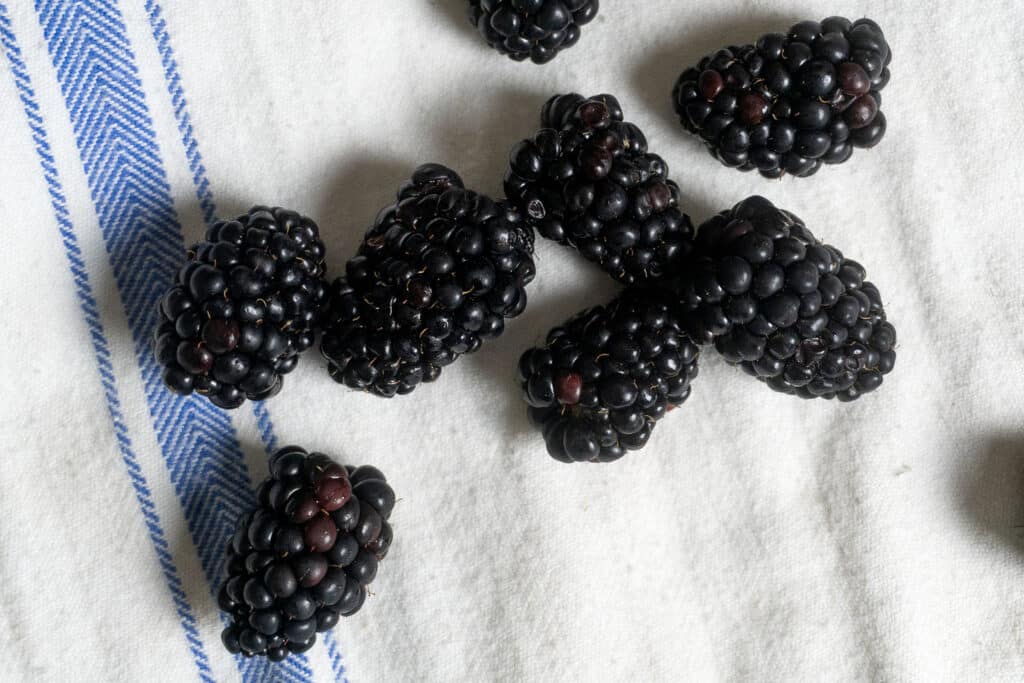
Blackberries are small, dark purple to nearly black berries that grow on thorny brambles. They have a sweet, slightly tart taste and a juicy texture that makes them popular for fresh snacking, baking, smoothies, and jams. Unlike some berries, blackberries hold their shape well in recipes while still releasing plenty of juice when cooked.
- Scientific name: Rubus subgenus Rubus
- Family: Rosaceae
- Genus: Rubus
- Kingdom: Plantae
- Order: Rosales
History of Blackberries
Blackberries have grown wild throughout Europe, Asia, and North America for thousands of years. Ancient cultures gathered them for food and traditional medicinal uses long before they were cultivated. Their hardy nature allowed them to thrive in forests, hedgerows, and open fields.
Commercial blackberry farming expanded during the 19th and 20th centuries as growers developed larger, sweeter varieties with fewer thorns. Today, blackberries are grown around the world and are enjoyed fresh during the summer months or frozen for year-round use.
Blackberry Recipes
Benefits
- Rich in vitamin C, which supports immune health and collagen production
- High in fiber, helping promote healthy digestion
- Loaded with antioxidants that help protect cells from oxidative stress
- Good source of vitamin K, which supports bone health and normal blood clotting
- Contains manganese, an important mineral for metabolism and bone development
Substitutes
- Raspberries, offering a similar tartness with a softer texture
- Blueberries, slightly sweeter and great for baking or smoothies
- Boysenberries, a larger berry with a rich, sweet-tart taste
- Marionberries, known for their deep, complex sweetness
- Mulberries, mild and sweet with a similar appearance