Salmon Skin Roll
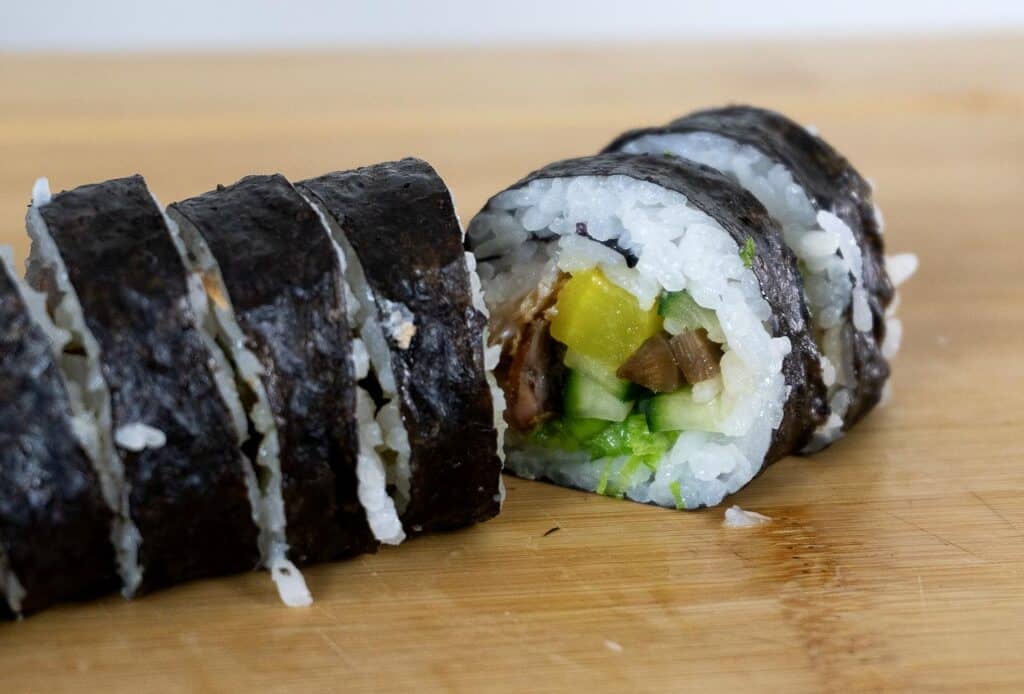
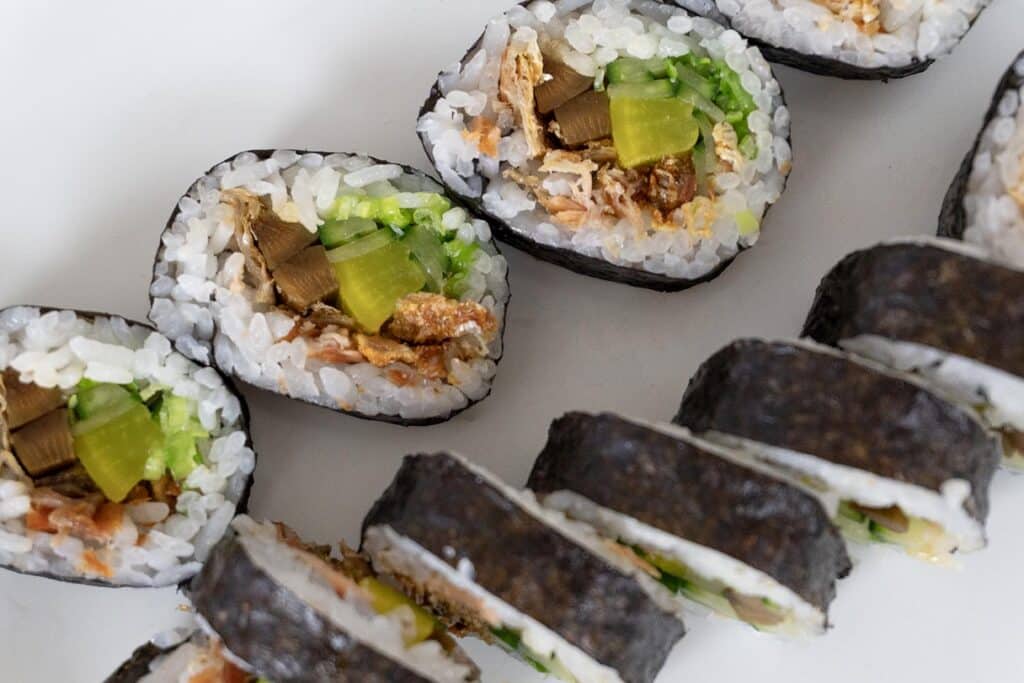
This Salmon skin roll is one of my all-time favorites. It’s built on crispy salmon skin, seasoned rice, and nori. It is crunchy, a little sweet, and always satisfying.
What Goes In A Salmon Skin Roll?
A classic build keeps things simple and textural.
- Crispy salmon skin: Grill or pan render strips of skin until the fat renders and the edges crackle.
- Sushi rice: Short grain rice seasoned with rice vinegar, sugar, and salt.
- Nori: One sheet per roll, shiny side down.
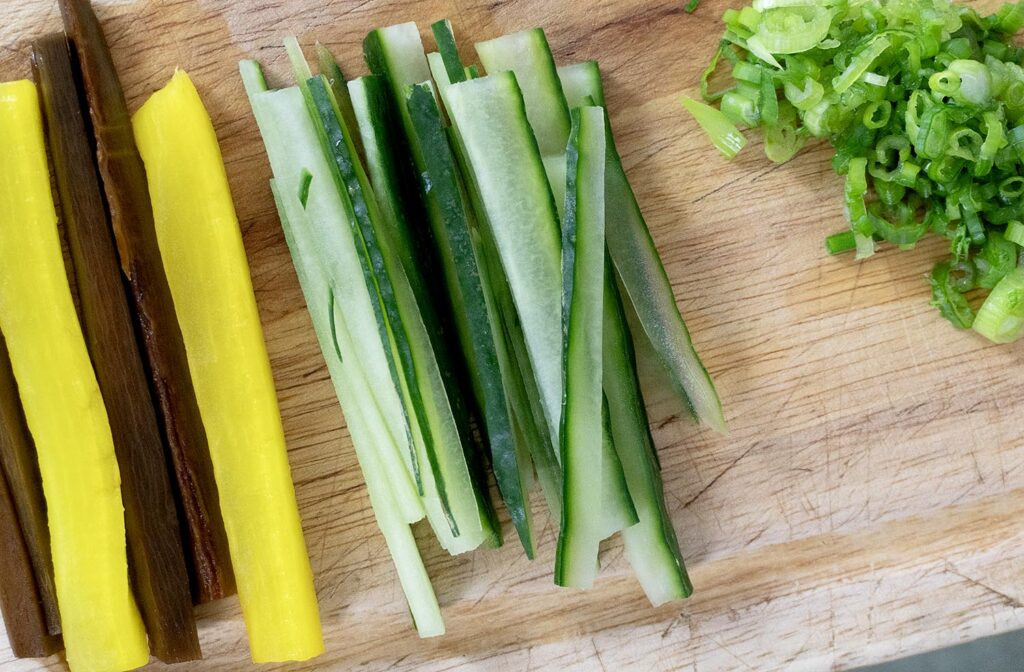
- Crunchy veg: Cucumber matchsticks are standard. Add scallions or kaiware sprouts for bite.
- Pickled accents: Burdock root (gobo) or takuan add a sweet, tangy snap.
- Finishes: Toasted sesame seeds, a light brush of unagi sauce, or a thin line of mayo if you like.
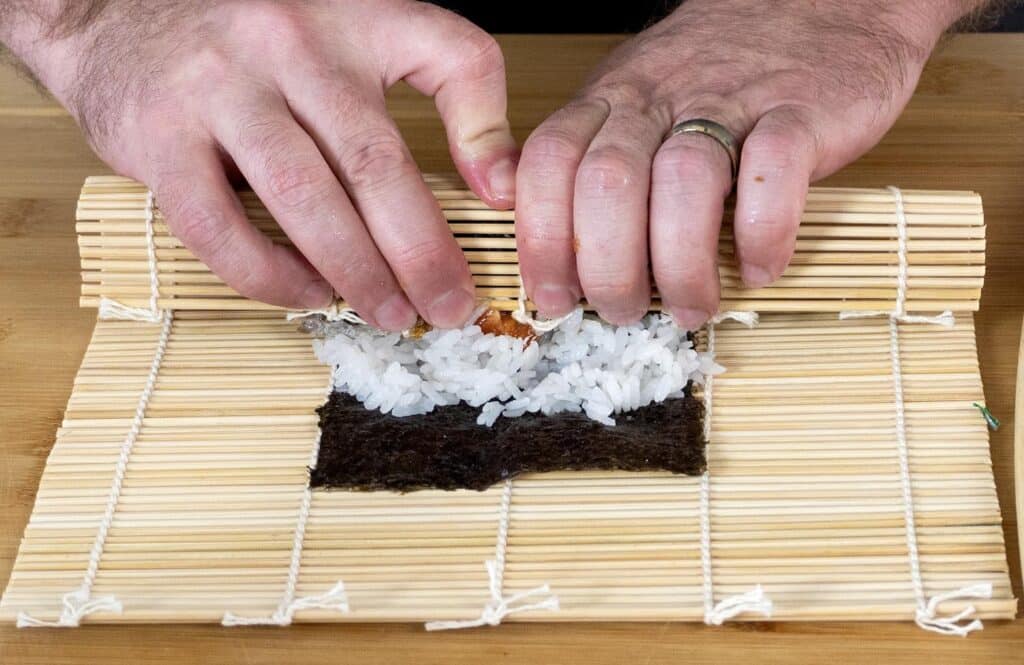
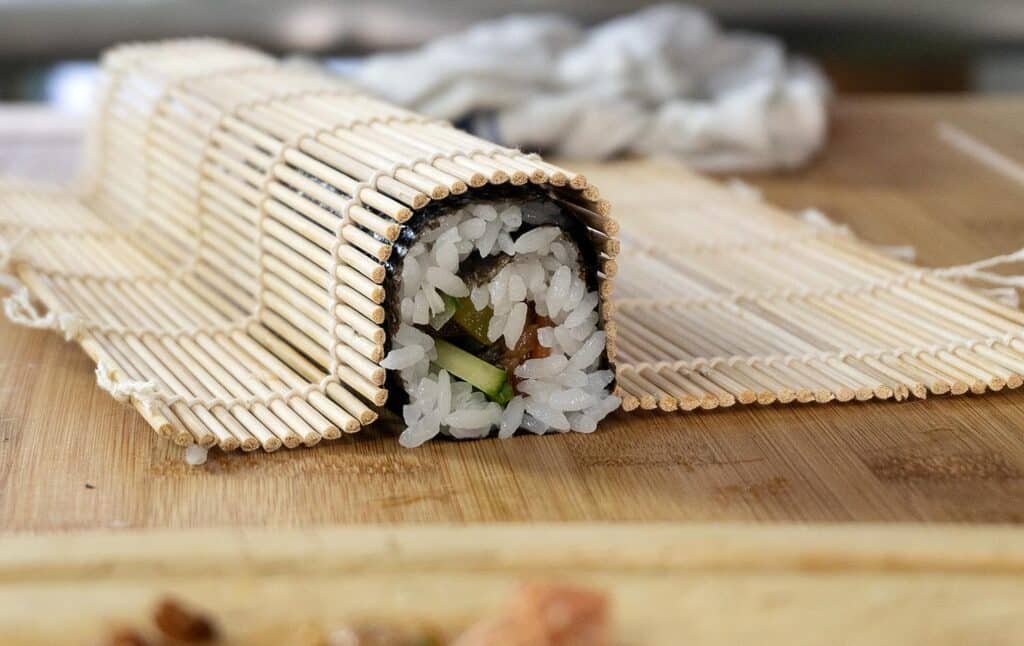
Rolling tip: Place nori on a mat, spread rice thinly, add salmon skin and fillings in a narrow line, then roll tight and slice with a wet, sharp knife.
What Is Burdock Root?
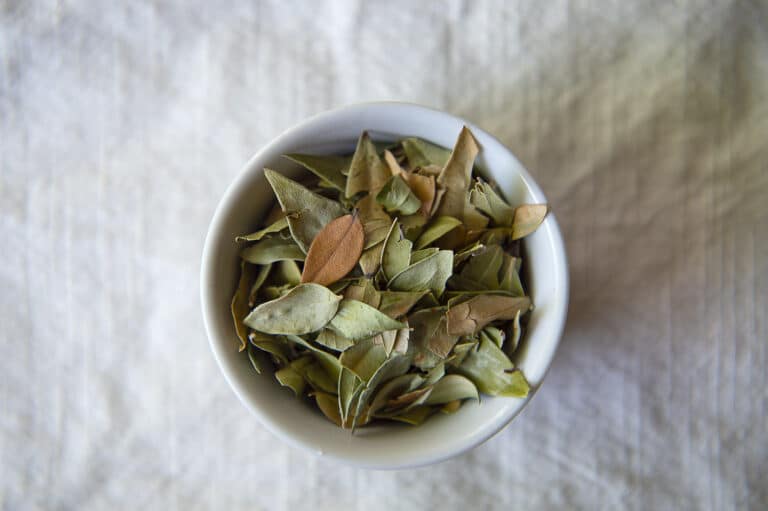
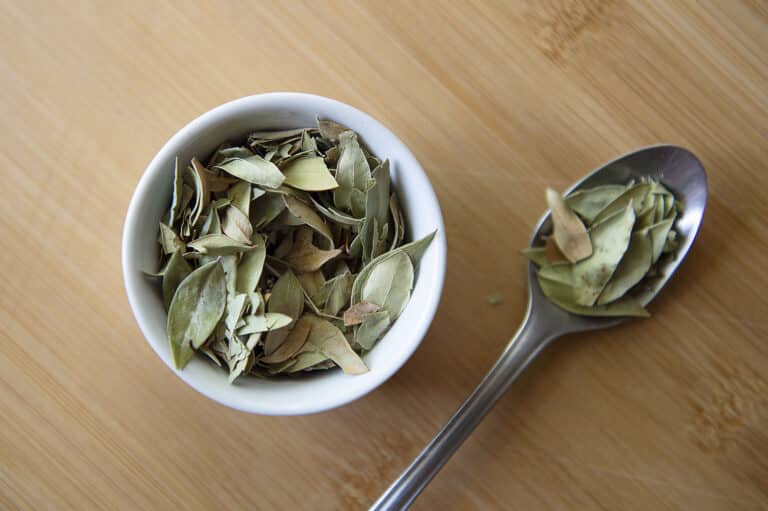
Burdock root is a long, thin root vegetable with a beige skin and a crisp interior. In Japanese cooking it is called gobo. The taste is earthy with a gentle sweetness, and it stays pleasantly crunchy after cooking or pickling.

How Is Burdock Root Used In Japanese Cuisine?
You will see gobo across home cooking and izakaya menus.
- Kinpira gobo: Thin batons stir fried, lightly braised, and glazed with soy, mirin, and a touch of sugar.
- Pickled gobo: Brined or sweet pickled for bento boxes and sushi rolls.
- Simmered dishes: Added to stews for depth and texture.
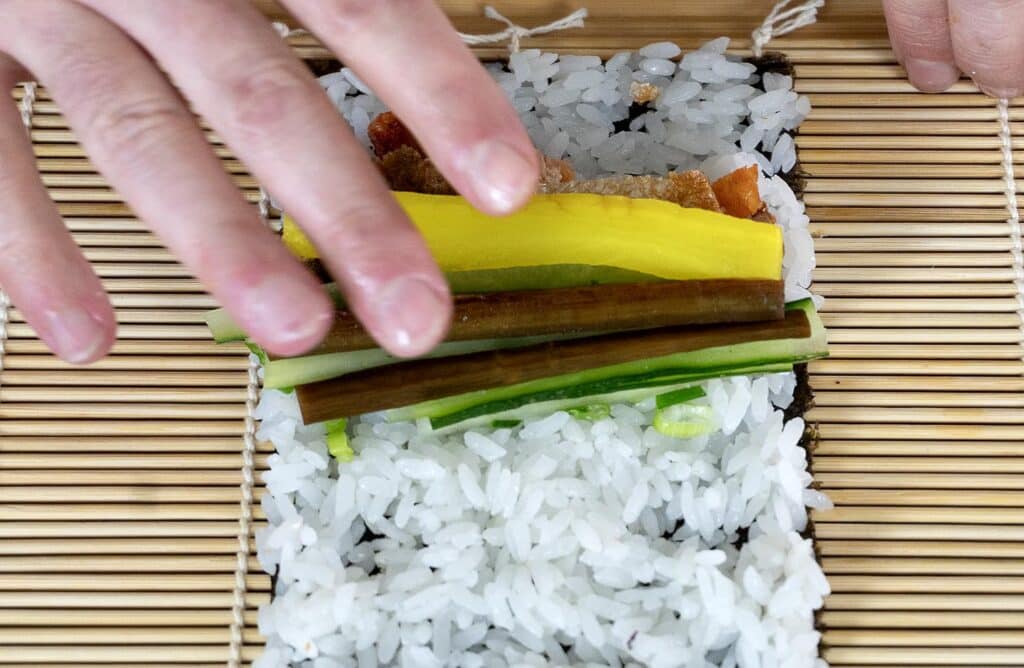
For a salmon skin roll, the pickled version fits best, cut into thin sticks so each bite has a clean snap.
What Is Takuan?
Takuan is bright yellow pickled daikon. It is crunchy, slightly sweet, and a little tangy. Thin strips of takuan give sushi rolls contrast and a pop of color. Use a few matchsticks alongside the salmon skin or serve slices on the plate as a palate refresher.
Can Dogs Eat Salmon Skin?
Plain, cooked salmon skin in small amounts is generally safe for many dogs, but keep it simple. No salt, no sauces, no onions, and no garlic. Make sure there are no bones attached and avoid any fried or very fatty pieces. Some dogs are sensitive to rich foods, which can upset the stomach. When in doubt, ask your vet before sharing.
Is Salmon Skin Good For You?
Salmon skin contains omega 3 fats, collagen, and minerals. It is energy dense, so keep portions moderate. Crisping the skin renders excess fat, which helps the texture and keeps the bite light. Choose good quality salmon and cook the skin thoroughly.
Storage Instructions
Sushi tastes best fresh. If you need to plan ahead, keep components separate.
- Cooked salmon skin: Cool, then store in an airtight container in the refrigerator for up to 2 days. Re crisp in a hot skillet or 400°F oven for a few minutes before rolling.
- Sushi rice: Use the same day. Cover with a damp towel at room temperature for several hours. Refrigeration makes it firm and dry.
- Pickles and vegetables: Keep chilled and dry to avoid soggy rolls.
- Assembled rolls: Wrap tightly and refrigerate up to 24 hours, but expect the nori to soften. Slice just before serving.

Salmon Skin Roll
Equipment
- 1 Rice cooker
Materials
- 1 section seedless cucumber cut into matchsticks
- 1 package seasoned burdock root
- 1 package Takuan
Instructions
- You will want to start by <a href="https://thembites.com/sushi-rice/">making your sushi rice</a>.
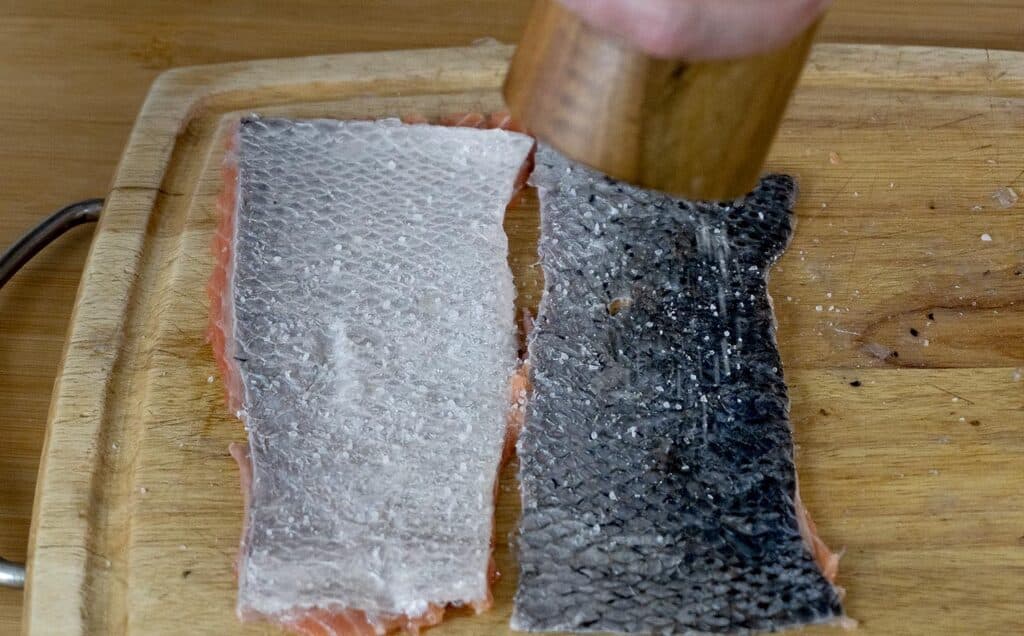
- While the rice is going, season your salmon skin generously with salt.
- Place the salmon skin on aluminum foil and into a preheated oven at 350 F.
- While your salmon skin is in the oven you will cut the burdock root, takuan, and cucumbers to the width of your sheet of nori.
- Pull your salmon skin once it's nice and crispy. You'll have to keep an eye on this and make sure that it doesn't burn. Drain off the excess fat, and pat the salmon skin with a paper towel.
- Allow your sushi rice to cool after you've added in your vinegar mixture, and begin assembling your roll.
- I was taught to make this with the seaweed on the outside, so you won't have to wrap your bamboo mat with plastic wrap.
- Add rice to about 3/4 of the sheet of nori, and then all of your ingredients at the bottom.
- Now just simply roll it up, cut and enjoy! Make sure to dip the tip of your knife in water between each cut. If you allow the water to run down the edge of your knife this will make for a smoother cut.