
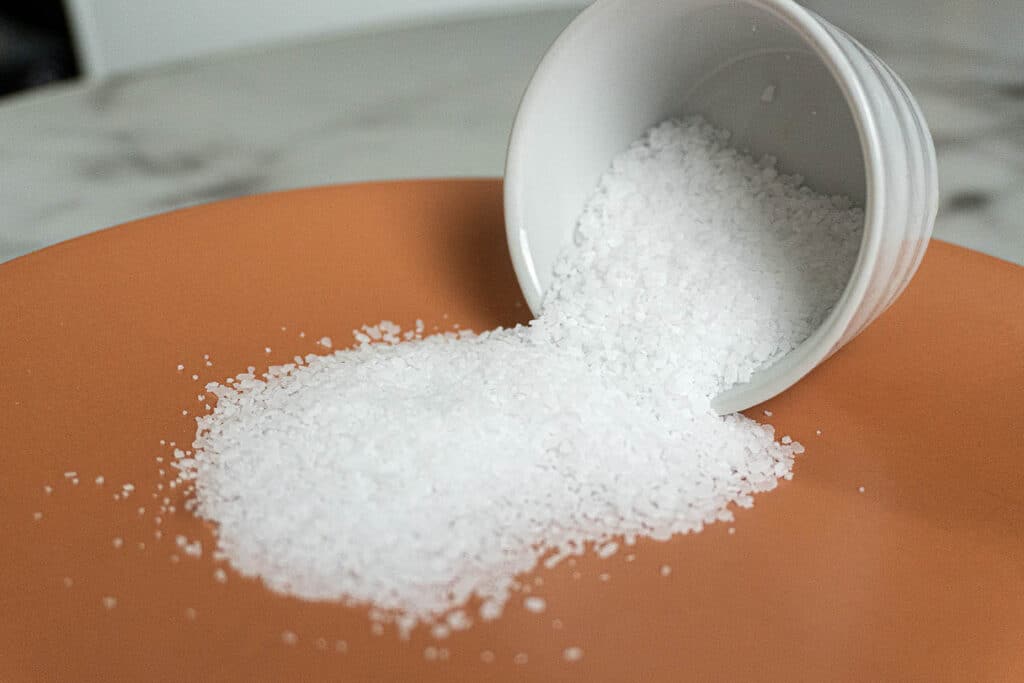
Salt
Salt is a mineral used like a spice in nearly every cuisine on the planet. It is best known for making food taste more “like itself,” but it also changes texture, controls moisture, and helps preserve foods. Salt shows up in baking, fermenting, curing, pickling, brining, and everyday cooking, and a small amount can completely change how a dish comes together.
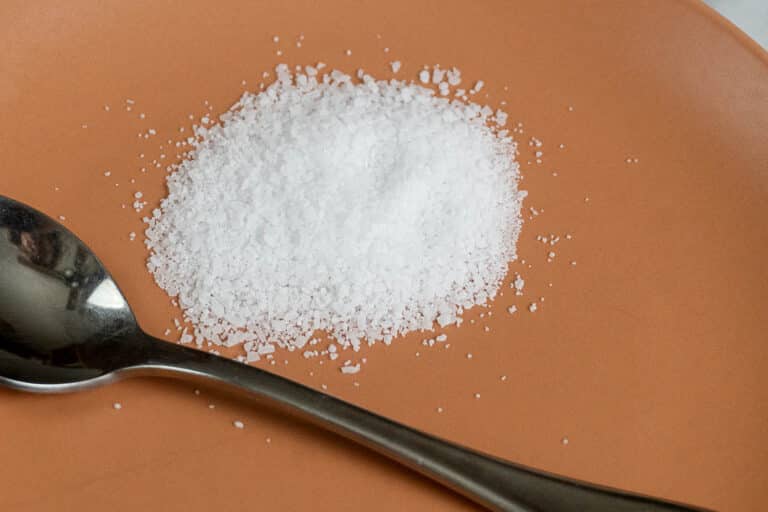
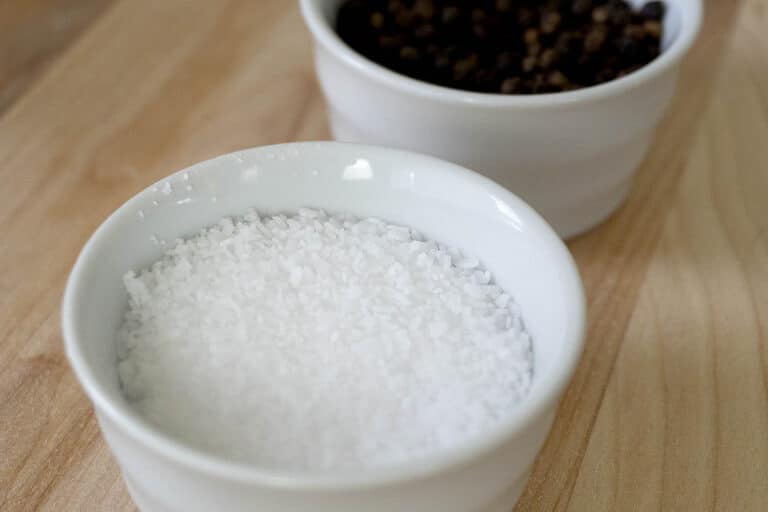
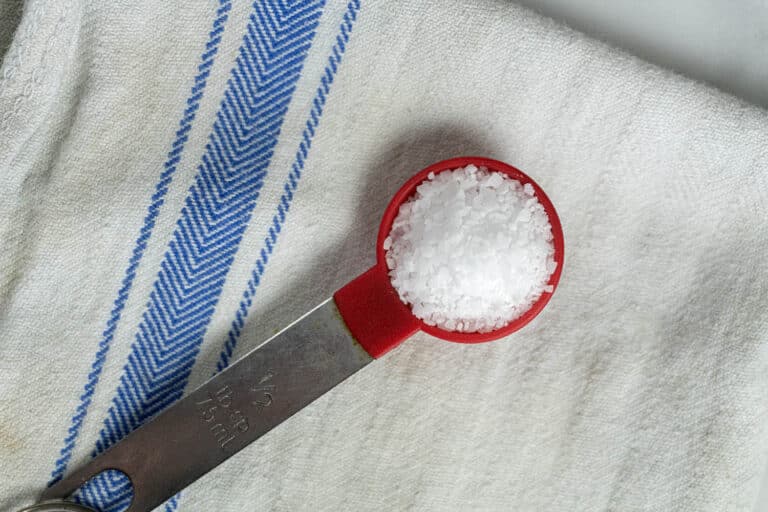
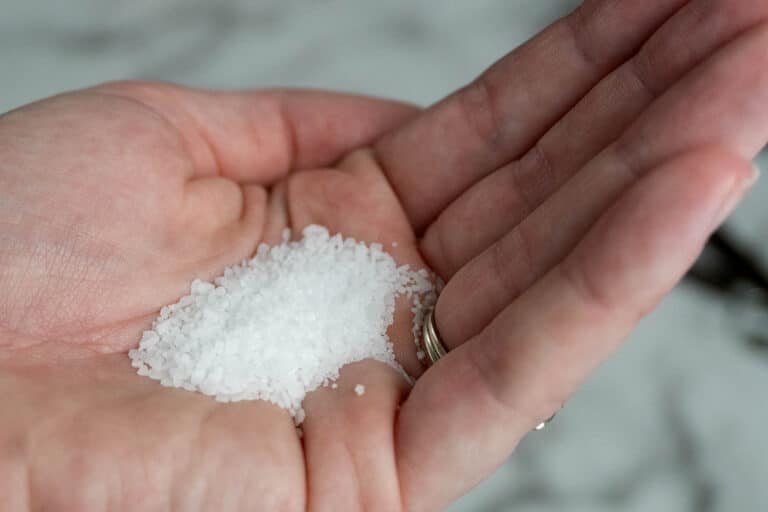
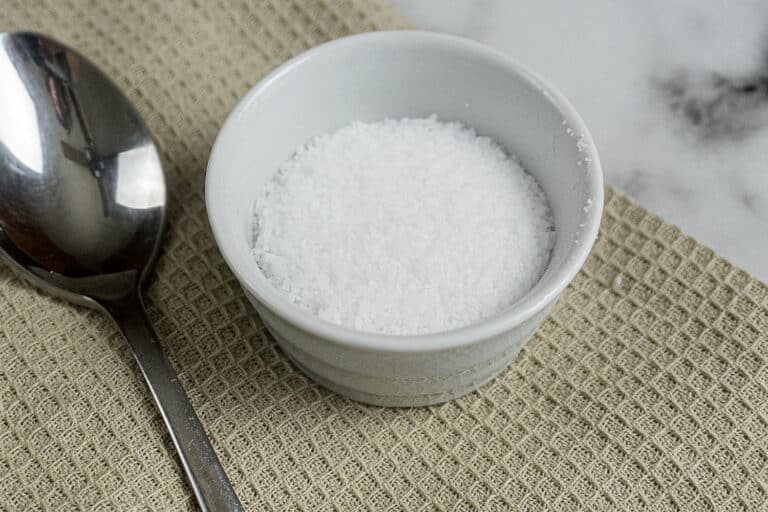
Even though we talk about salt the same way we talk about herbs and spices, it is not a plant product. It is primarily sodium chloride, usually mined from ancient seabeds or produced by evaporating seawater. The source and processing method affect crystal size, purity, and trace minerals, which is why a pinch of flaky salt does something different than the same pinch of table salt.
- Scientific name: Sodium chloride
- Family: Not applicable, salt is not a plant
- Genus: Not applicable
- Kingdom: Not applicable
- Order: Not applicable
History of Salt
Salt has been central to human life for thousands of years, partly because it makes food safer and easier to store. Before refrigeration, salting was one of the most reliable ways to preserve meat and fish, and it played a major role in trade routes, local economies, and even taxes. Some of the oldest “industrial” operations in the world were saltworks, where seawater was evaporated in pans, often in sunny coastal regions.
Culturally, salt has long been treated as more than just a seasoning. It has been used in ceremonies, as a symbol of hospitality, and as an essential ration for soldiers and travelers. The word “salary” is often linked to historical salt payments and allowances, which tracks with how valuable salt once was compared to today’s cheap, endless shaker situation.
Modern salt production is generally split into three big categories:
- Sea salt: Made by evaporating seawater, usually with minimal processing.
- Rock salt: Mined from salt deposits, then cleaned and sometimes refined.
- Evaporated salt: Often produced from brine, refined for consistency, and commonly sold as table salt.
Those categories overlap in real life, but they explain why salts can look and behave differently in the kitchen.
Benefits
Salt is essential for human health, but the key word is “essential,” not “unlimited.” Sodium helps regulate fluid balance, supports nerve function, and plays a role in muscle contraction. Without enough sodium, your body cannot function properly. With too much sodium, many people run into blood pressure issues over time.
Practical ways salt helps, beyond basic nutrition:
Practical ways salt helps, beyond basic nutrition:
- Helps food taste balanced: Salt can reduce harsh bitterness and help sweet and sour notes feel clearer.
- Improves texture in baking: Salt strengthens gluten structure in bread dough, which can improve rise and chew.
- Supports fermentation: In things like sauerkraut or pickles, salt helps control which microbes thrive, helping the “good” ones win.
- Helps retain moisture: Brining meats with salt can help them hold onto water during cooking, reducing dryness.
- Preserves food: In curing and preserving, salt lowers available water, slowing spoilage.
Substitutes
Salt is tricky to replace because it does multiple jobs at once. The right substitute depends on what you need it to do.
If you need a seasoning substitute (taste impact):
- Acid: A squeeze of lemon or a splash of vinegar can make food feel more “alive,” even without much salt.
- Aromatics: Garlic, onion, scallions, and ginger can add punch when salt is reduced.
- Umami ingredients: Parmesan, miso, soy sauce, fish sauce, and mushrooms can add depth, but many are salty too, so read labels.
- Salt-free blends: Herb and spice blends without added salt can help, especially with roasted vegetables and proteins.
If you need a functional substitute (what salt does in a process):
- Baking: You can reduce salt, but you usually cannot fully remove it without changing results, especially in yeast breads.
- Fermentation: There is no true swap for salt’s role in controlling fermentation. Lower-salt ferments are possible, but the method must be adjusted and food safety needs to be respected.
- Brining: You can use a lighter brine, but water alone is not a substitute for what salt does to protein structure.
If you want a “lower sodium” option:
Potassium chloride salt substitutes: These can work for some people, but they can taste bitter to some, and they are not appropriate for everyone, especially people with kidney issues or on certain medications. Check with a clinician if you are unsure.