The Easiest And Quickest Pickled Red Onions Recipe
Pickled red onions are a delicious and versatile addition to many meals. Learn how to make them in just a few simple steps with this easy recipe.
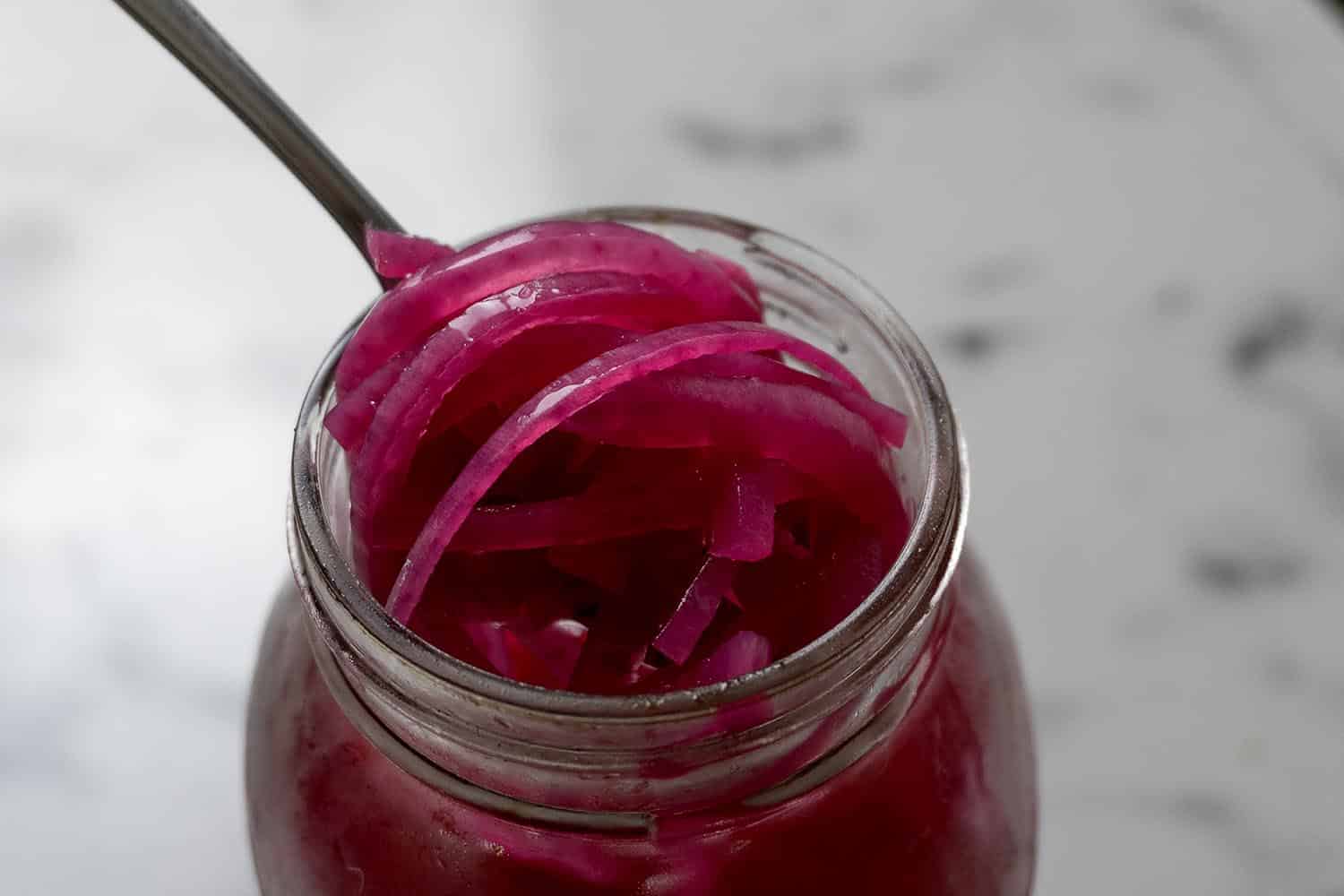
How to Make Pickled Red Onions
This is a fast refrigerator pickle, not a canning project. No water bath, no special gear, just a mason jar, a saucepan, and a little patience.
Ingredients
- 2 red onions
- 2 cups white vinegar
- 2 cups water
- 1/3 cup sugar
- 2 tablespoons kosher salt
- 2 garlic cloves, optional
- 1 teaspoon mixed peppercorns, optional
Instructions
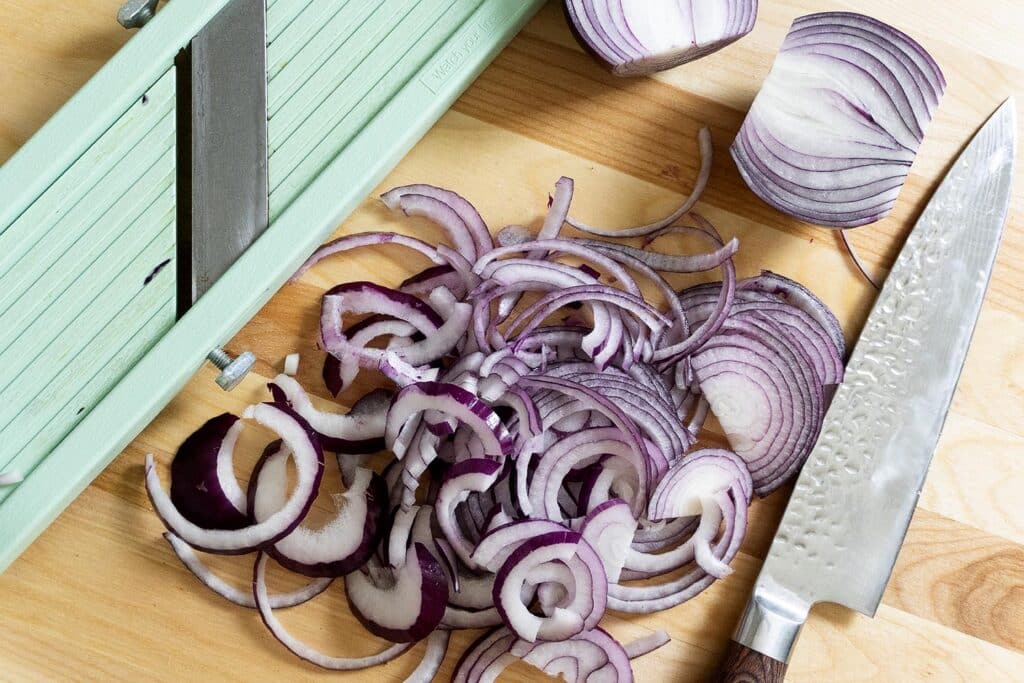
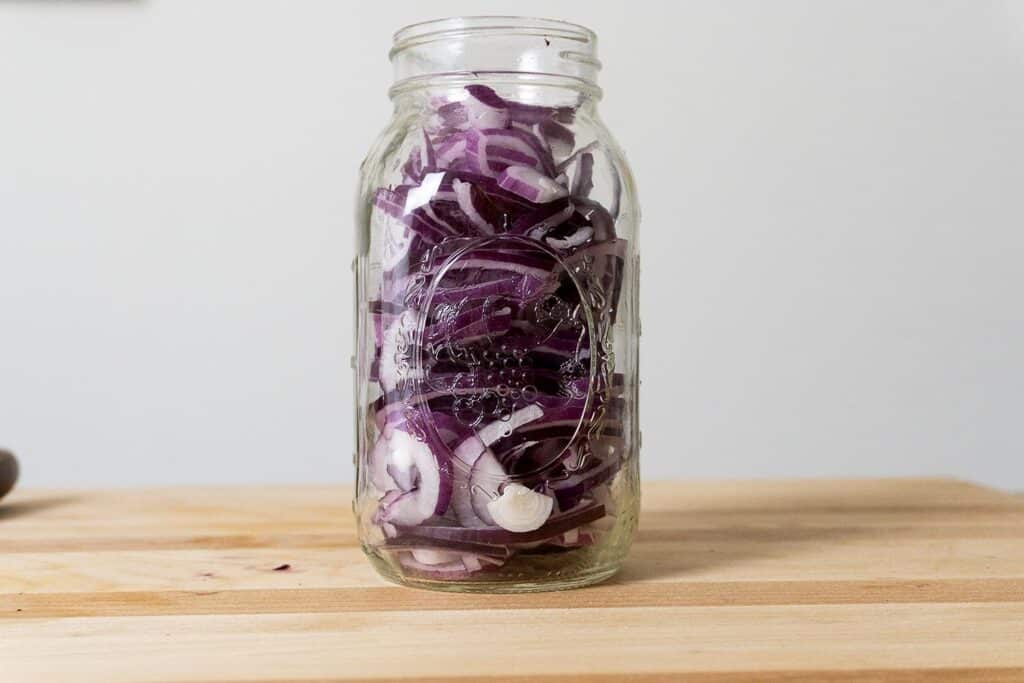
- Slice. Thinly slice the onions. A mandoline makes perfect, even slices, and it saves your fingers. Add the slices to one large mason jar or divide them among smaller jars. Tuck in the garlic and peppercorns if using.
- Make the brine. In a medium saucepan over medium heat, combine white vinegar, water, sugar, and kosher salt. Stir until the sugar and salt dissolve, about 1 minute.
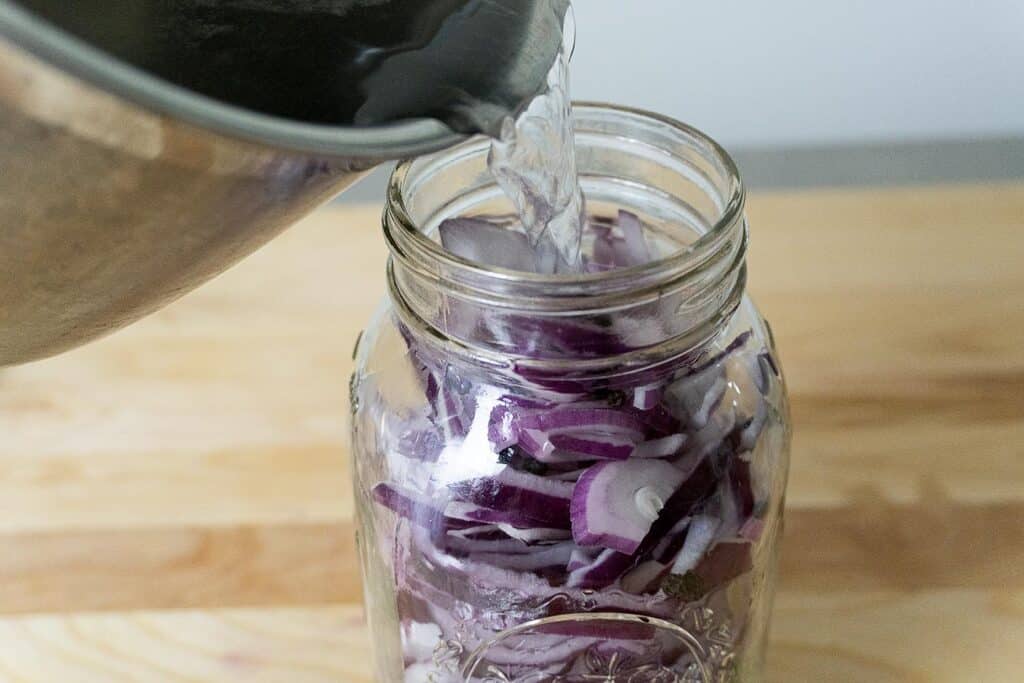
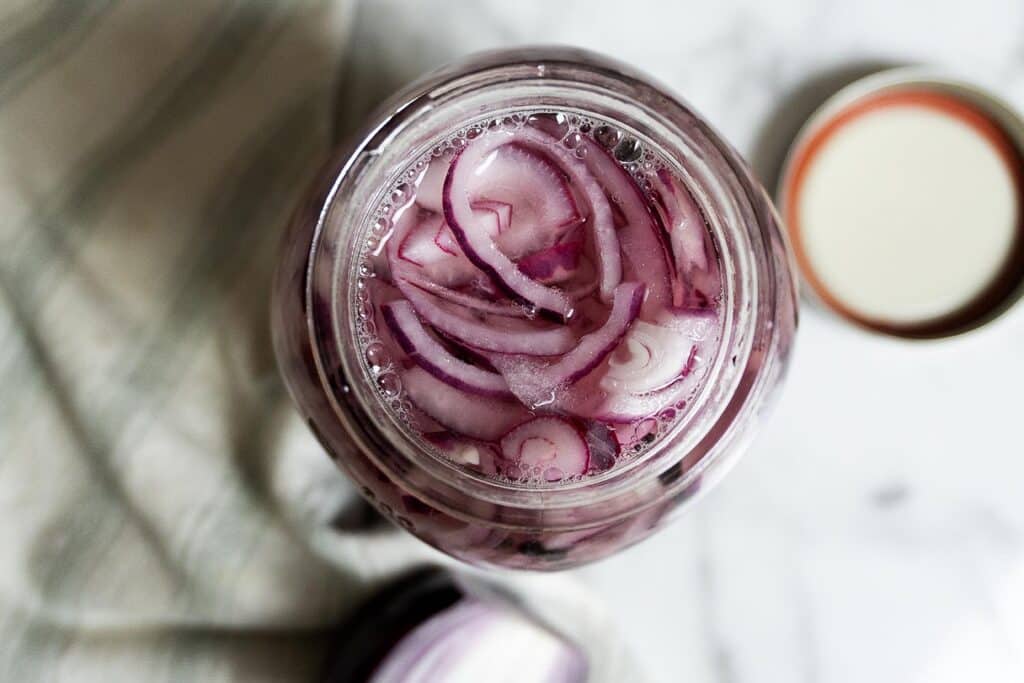
- Pour. Let the brine cool for a minute or two, then carefully pour it over the onions until submerged.
- Chill. Cool to room temperature, then cover and refrigerate. Very thin slices are ready in about 1 hour. Thicker slices are best overnight.
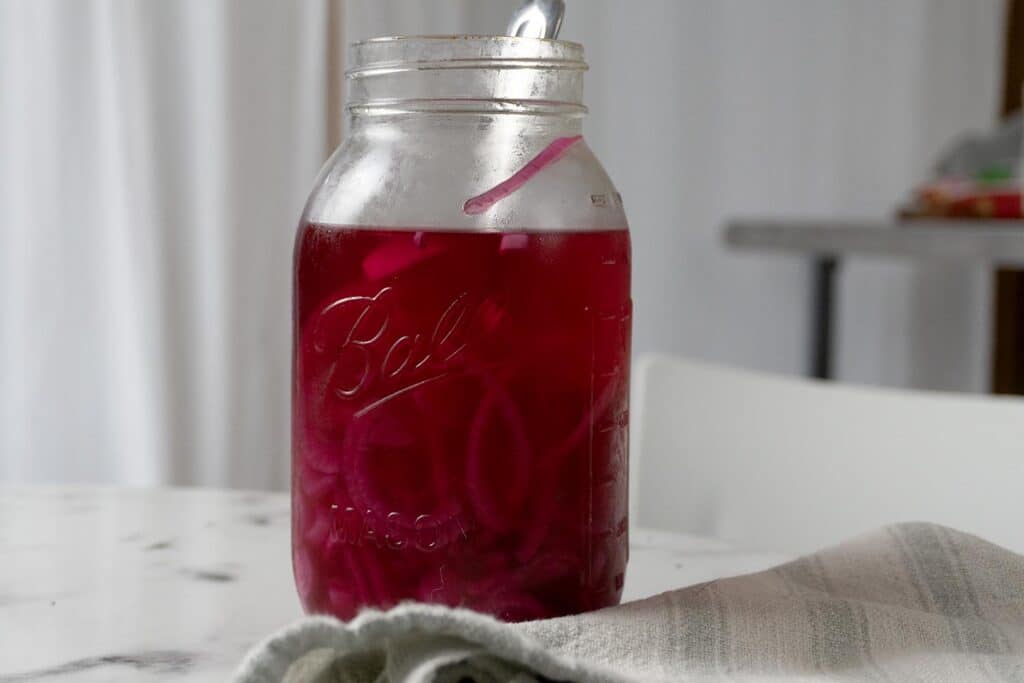
- Store. Keep in the fridge for up to 2 weeks.
Pro move, keep one jar classic and a second with add-ins like jalapeños or red pepper flakes. Variety in the fridge means you always have the right zing for the job.
What are some common mistakes when pickling onions?
- Too hot for too long. Boiling the onions in the brine can make them soft. Pour warm brine over raw sliced onions instead, then chill.
- Undersalting. Salt is structural in pickling, not just seasoning. It helps keep onions crisp and balances acidity.
- Overpacking the jar. If onions are crammed in tight, the brine cannot circulate. Leave space so every slice gets a bath.
- Using old, soft onions. Start with firm, fresh red onions. Limp onions in, limp pickles out.
- Forgetting the acid balance. A weak brine dulls results. Stick to the ratios below and adjust sweetness to preference, not the vinegar strength.
Make It Your Own
Think of this as a template. Swap or add according to your pantry and the dish on deck.
- Vinegar swaps: Apple cider vinegar brings fruity notes. Red wine vinegar gives deeper color. Rice vinegar is softer and slightly sweet. White wine vinegar sits in the middle, clean and bright.
- Heat: Add sliced jalapeños, a pinch of red pepper flakes, or a few black peppercorns.
- Herbs and spices: Bay leaf, coriander seeds, mustard seeds, or a sprig of thyme. Keep the total to a teaspoon or two so the onions stay the star.
- Citrus twist: A few strips of lemon or orange zest add lift without extra liquid.
- Sweeteners: White sugar keeps the brine neutral. Brown sugar adds a mild molasses note. Maple syrup works for a natural option; start small and taste.
More Ways to Use Pickled Red Onions
- Sandwiches and burgers: Tuck into grilled cheese, turkey clubs, or smash burgers for snap and acid.
- Tacos and burritos: The bright pink onions pop against meats, beans, and spicy salsas in Mexican dishes.
- Salads and grain bowls: Cut richness from dressings or grains with a few rings.
- Potatoes: Scatter over roasted potatoes or a loaded baked potato for contrast.
- Breakfast board: Add to avocado toast or a savory yogurt bowl.
- Pickle plate: Pair with other quick pickles and vegetables for an easy appetizer spread.
Which vinegar is best for pickling?
White vinegar is the most neutral and the cleanest for color. It keeps the onions bright and consistent.
Apple cider vinegar adds light fruit notes that work well with pork, chicken, and fall dishes.
Red wine vinegar brings a deeper hue and a slightly bolder edge.
Rice vinegar is gentle and slightly sweet, excellent if you prefer a softer profile.
White wine vinegar is balanced and a bit floral.
Use 5% acidity vinegar for reliable results. If you mix types, keep the total vinegar volume the same.
What is the 3 2 1 rule for pickling?
Many home picklers use a 3–2–1 guideline for quick brines, three parts vinegar, two parts water, one part sweetener, plus salt to taste. Our base recipe uses a 1:1 vinegar to water ratio with a lighter sweetener level because onions already bring their own natural sweetness. If you want a punchier, more assertive jar, nudge the brine toward the 3–2–1 ratio. Keep salt around 1 to 1.5 tablespoons per cup of vinegar for balance.
Are pickled red onions healthy?
They are a condiment, so treat them like hot sauce or salsa, a little goes a long way. Onions bring beneficial compounds and a tiny amount of fiber. The brine includes sodium and a touch of sugar. If you are watching either, reduce the sugar to a couple of tablespoons or use a zero-calorie sweetener, then taste and adjust. For salt, you can trim to 1 tablespoon per batch, but do not eliminate it entirely, salt supports texture and tang.
How to keep onions crunchy when pickling?
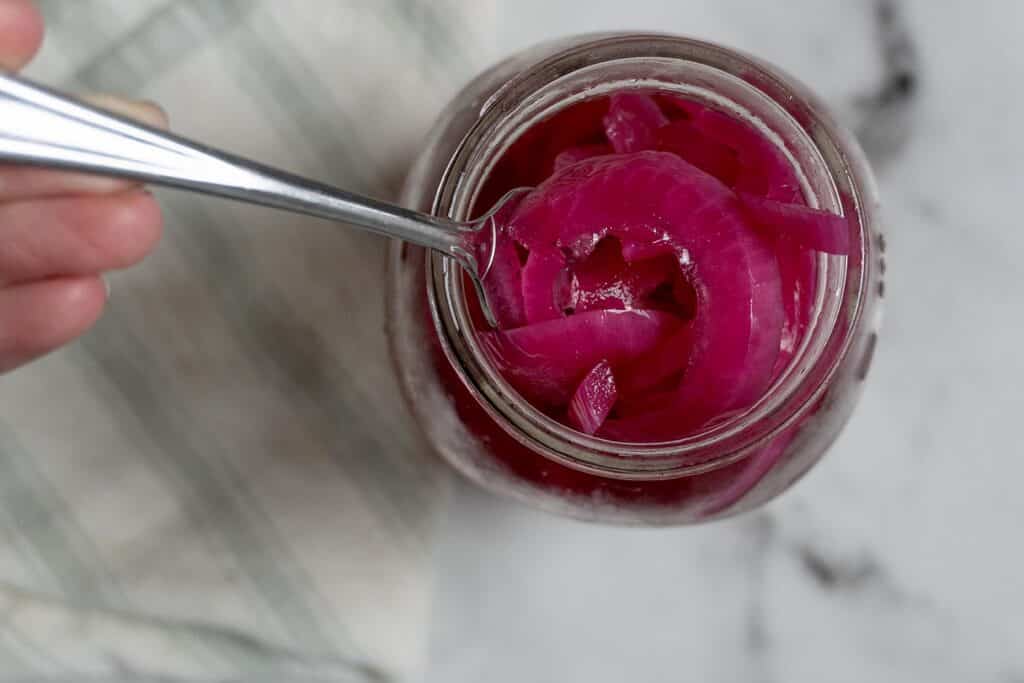
- Slice thicker. For extra crunch, slice 1/8 inch thick instead of paper thin.
- Keep the onions raw. Do not simmer the onions. Let the warm brine do the work.
- Quick-cool. After pouring, let jars cool, then move to the fridge promptly.
- Salt pre-toss, optional. Toss slices with 1 teaspoon kosher salt in a bowl, rest 10 minutes, pat dry, then brine. This pulls a little moisture and firms the texture.
- Use the right jar. Glass mason jars with tight lids keep air out and crunch in.
Is there a difference between pickling vinegar and regular white vinegar?
Yes. Pickling vinegar is often a bit stronger, commonly around 7% acidity, and formulated for canning. Regular white vinegar is typically 5% acidity, perfect for refrigerator pickles like this recipe. If you use a stronger vinegar, expect a sharper punch. You can dilute it slightly with water to match the ratios above.
Why do you put salt on onions before pickling?
Salting draws out water by osmosis, which firms the onion’s structure. It also tames bitterness and helps the brine penetrate evenly. A short pre-salt is optional for quick pickles, but it is a reliable trick when you want extra crisp slices that stand up on hot sandwiches or steamy tacos.
Quick FAQ Recap
- Best jars: Standard wide-mouth mason jars, easy to pack and pour.
- Do I need hot water to sanitize? For refrigerator pickles, wash jars well with hot soapy water and rinse. No boiling needed.
- Can I use red wine vinegar or white wine vinegar only? Yes. The color and taste will shift slightly, still great.
- Can I add other vegetables? Absolutely. Add carrot matchsticks, sliced radishes, or cucumbers for a mixed pickle jar.
- How long in the fridge? Up to 2 weeks for best texture and color.
Pro Tips for Success, and Good Eating
- Slice evenly with a mandoline for consistent results.
- Pack onions loosely so every ring gets brine contact.
- Keep a classic jar and a spicy jar, one with jalapeños, red pepper flakes, or a bay leaf.
- Label jars with the date so you actually know when two weeks is up. Your future self will thank you.
If this jar does not fix a bland sandwich, nothing will. Well, maybe two jars.
Pickled Red Onions
Ingredients
- 2 Red onions
- 2 cups white vinegar
- 2 cups water
- ⅓ cup sugar
- 2 tablespoons kosher salt
- 2 garlic cloves Optional
- 1 teaspoon mixed peppercorns Optional
Instructions
- Thinly slice the onions. A mandoline helps. You can choose to divide the slices into numerous jars, or just place them into one large mason jar. Add the garlic and peppercorns to each jar, if using.
- In a medium saucepan over medium heat, combine the vinegar, water, sugar, and salt. Stir until the sugar and salt dissolve, about 1 minute. Let the brine cool slightly, then pour it over the onions. Cool to room temperature, then refrigerate.
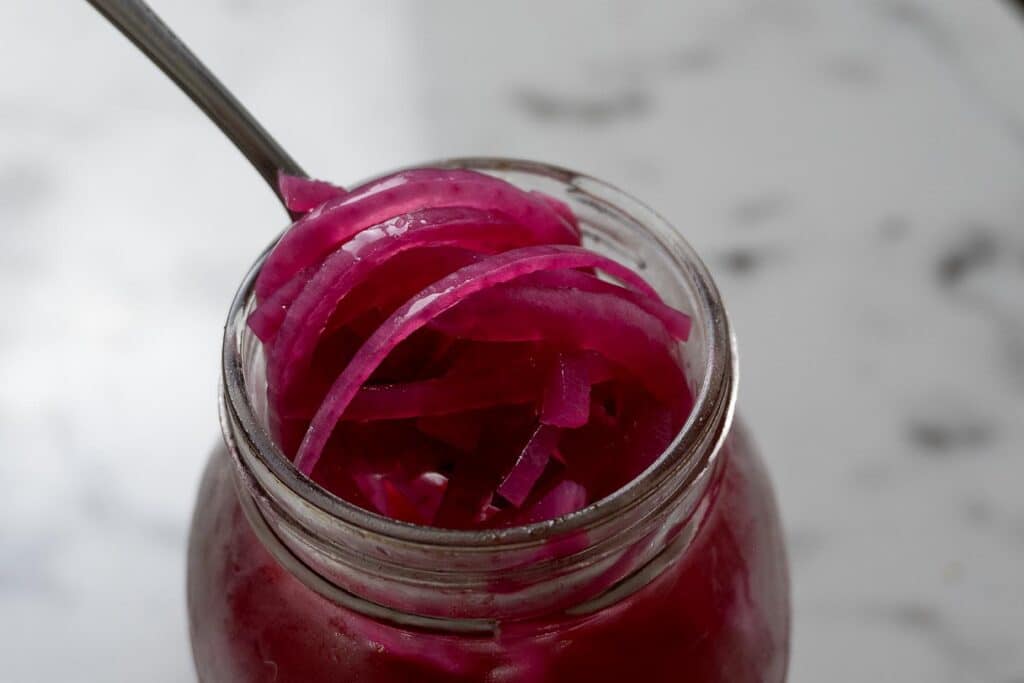
- The onions are ready when they turn bright pink and tender. Very thin slices take about 1 hour. Thicker slices are best left overnight. Store in the fridge for up to 2 weeks.