Baba Ganoush
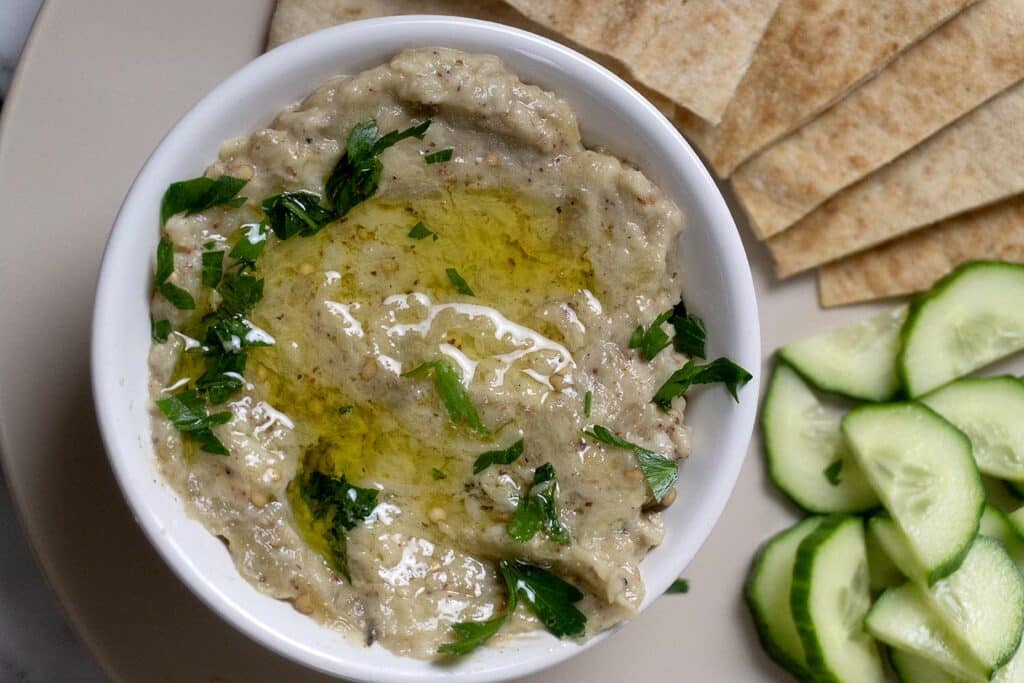
This baba ganoush is the smoky eggplant dip that makes people hover around the pita basket. Char the eggplants over hot coals, mash them with lemon, tahini, garlic, and spices, then let it chill so everything settles into a creamy, scoopable dip.
What Is Baba Ganoush Made Of?
Baba ganoush is built on cooked eggplant. After the eggplant is charred and softened, it’s mixed with a few staples that show up in many Middle Eastern kitchens.
Your recipe keeps it clean and traditional:
- Globe eggplants, charred until the skin is blackened
- Lemon juice for brightness
- Tahini for richness and body
- Garlic for bite
- Sumac for a citrusy, tart note
- Aleppo pepper for gentle heat
- Salt to bring it all together
- Olive oil and pita for serving
The big difference between “fine” baba ganoush and “just okay” baba ganoush usually comes down to how well the eggplant is cooked and drained.
Why Charcoal Makes A Difference
Charcoal gives baba ganoush its signature smokiness. Putting the eggplant directly into the coals sounds intense, but it works because the skin takes the heat and the inside turns soft and silky.
A couple helpful cues:
- You want the skin crisp and blackened.
- The eggplant should feel collapsed and soft when you lift it with tongs.
- After cooking, covering it with a towel for a few minutes traps steam and makes peeling easier.
Draining matters too. Eggplant holds water, and excess liquid can make the dip thin. Let the peeled flesh sit briefly, then pour off any puddles before mixing.
What Does Baba Ganoush Mean Literally?
Baba ganoush is often translated as “pampered father” or “spoiled dad,” depending on who you ask. The phrase has roots in Arabic, and while there are different explanations, the general idea is that it’s a beloved dish, something you make with care and serve generously.
Even if the exact translation varies, the message is clear. This is comfort food. Dip, scoop, repeat.
Is Baba Ganoush Healthier Than Hummus?
It can be, depending on how it’s made and what you’re comparing.
Baba ganoush is primarily eggplant, which is low in calories and high in fiber. Tahini and olive oil add healthy fats. Hummus is built on chickpeas, which add more protein and more carbs, plus tahini and olive oil as well.
A practical way to think about it:
- If you want a lighter dip, baba ganoush often feels lighter.
- If you want more protein and staying power, hummus usually wins.
Both can fit into a balanced diet. The real “health” factor is what you’re eating it with. Pita and chips are fun, but veggies make it easier to keep things lighter.
Can Diabetics Eat Baba Ganoush?
Many people with diabetes can enjoy baba ganoush, especially because it is low in carbs when served with the right dippers. Eggplant, tahini, lemon, garlic, and spices generally do not spike blood sugar the way bread or crackers can.
A few smart choices:
- Serve with cucumber, bell peppers, celery, or carrots.
- Use whole grain pita if you want bread.
- Watch portion size with tahini and olive oil, since fats are calorie dense.
If someone is managing diabetes, the dip itself is usually not the issue. It’s the pita pile next to it that can shift the balance.
How To Serve Baba Ganoush
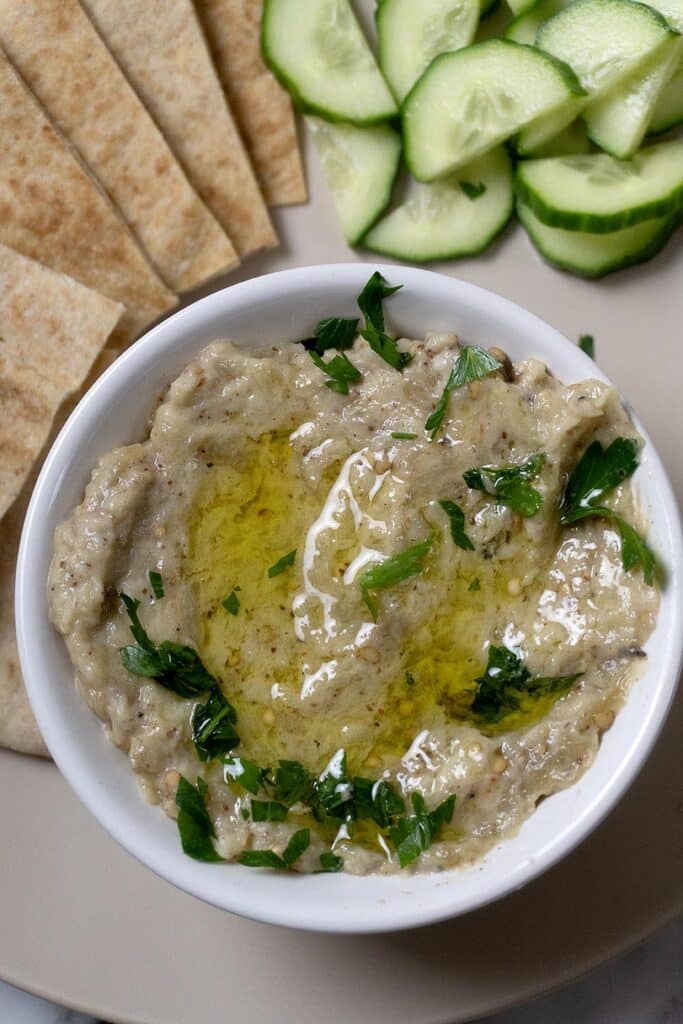
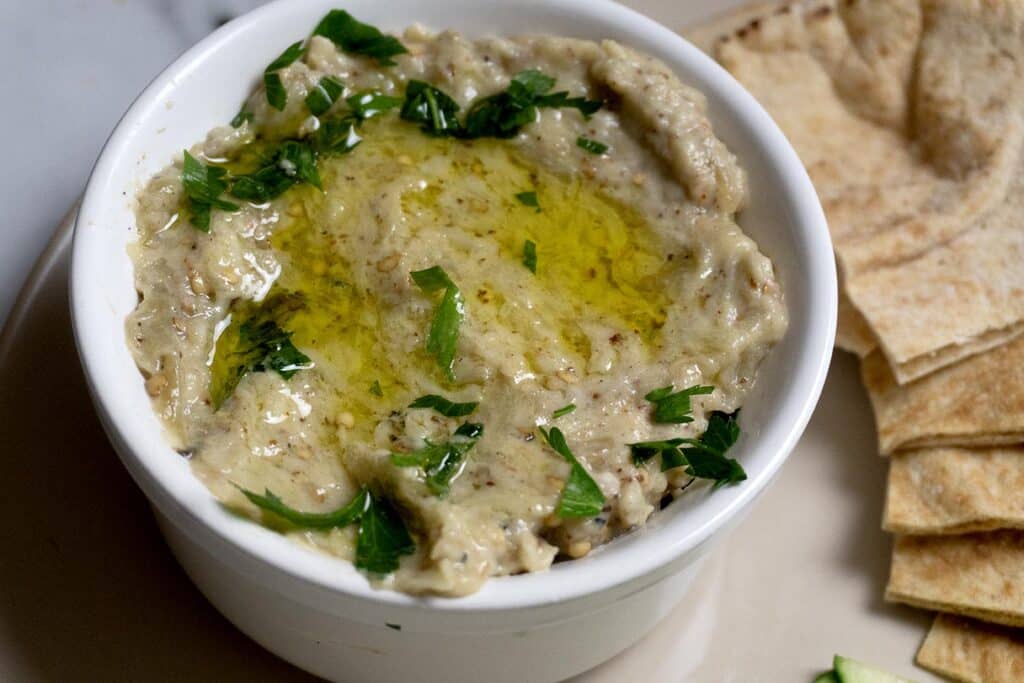
This dip shines when you keep the presentation simple. Scoop into a bowl, make a little swirl on top, drizzle with olive oil, and serve with warm pita.
A few easy add-ons that fit the vibe:
- Extra pinch of sumac on top
- A sprinkle of Aleppo pepper
- Chopped parsley if you have it
- Toasted sesame seeds for a little crunch
It also works as a spread in wraps or as a side with grilled chicken, lamb, or roasted vegetables.
Storage Instructions
- Refrigerator: Store in an airtight container for up to 4 days. It often tastes better after the first day.
- Stir before serving: Some separation is normal. Stir it and give it a quick taste for salt and lemon.
- Freezing: Not ideal. Eggplant dips can turn watery after thawing. If you do freeze it, expect texture changes.
- Make ahead tip: Chill at least 1 hour, but overnight is even better. The garlic and spices settle in and the dip thickens slightly.
Baba Ganoush
Ingredients
- 2 globe eggplants
- 1 juice of medium sized lemon
- ¼ cup tahini
- 2 garlic cloves minced
- 1 tsp sumac
- ½ tsp Aleppo pepper
- salt to taste
For serving
- olive oil
- pita
Instructions
- Prepare a charcoal grill. Once the coals are hot, place the eggplant directly into the coals. Grill for 20 minutes, using tongs to rotate a couple of times. The skin should be charred and crispy. *If you don't have a charcoal grill, see below for oven roasting instructions.
- Place the eggplant into a large bowl and cover with a towel for a few minutes until slightly cooled. Drain any excess liquid. Peel the skin off and discard.
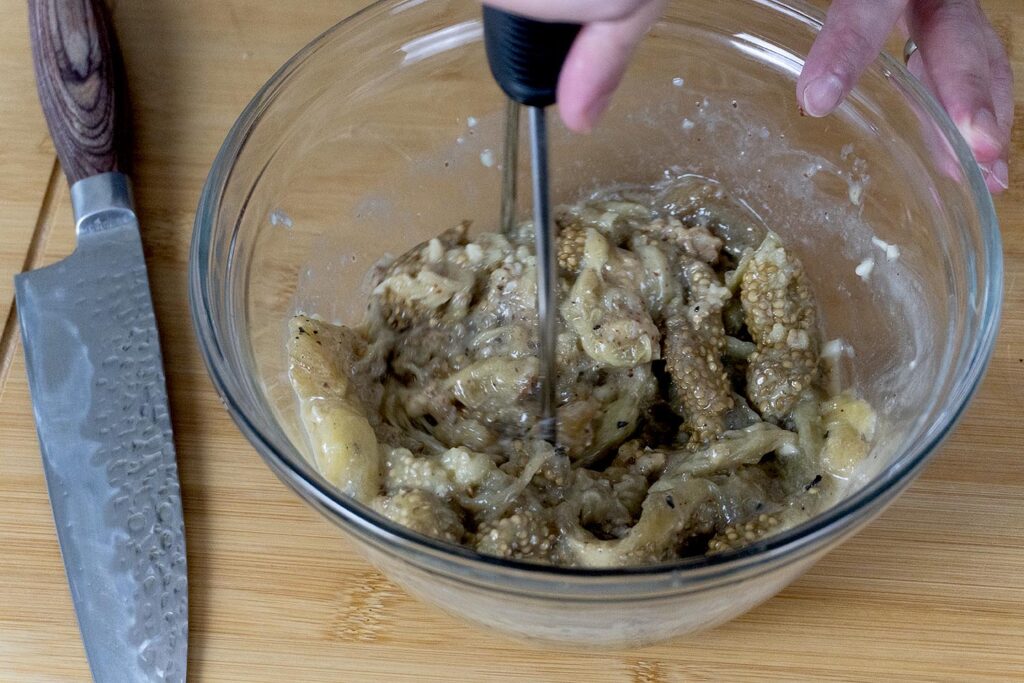
- Transfer to a medium sized bowl and add the remaining ingredients. Use a fork or potato mashed to gently mash the eggplant and combine the ingredients. Taste and add more salt if needed.
- Cover and refrigerate for at least 1 hour, but the longer the better.
- Remove from the fridge and scoop into a serving bowl. Top with olive oil and serve with pita.