Mandu Recipe
This mandu recipe walks you through how to make traditional Korean dumplings at home, filled with a savory mix of meat and vegetables, wrapped in thin dough, and cooked by steaming, pan-frying, or boiling.

Whether you’re making them for Lunar New Year or just a cozy night in, mandu is a satisfying dish that brings people together.

What Other Styles of Korean Dumplings Are There?
Korean cuisine features a wide variety of dumplings beyond basic mandu. Here are a few popular styles:
- Gun Mandu: Pan-fried dumplings with a crispy bottom and soft top, often served as an appetizer or side dish.
- Mul Mandu: Boiled dumplings that are tender and usually served in soups or broths.
- Jjin Mandu: Steamed dumplings that are soft and light, often packed with a classic pork and vegetable filling.
- Kimchi Mandu: Spicy dumplings filled with fermented kimchi, giving the filling a tangy kick.
- Wang Mandu: Oversized dumplings typically sold as street food, filled generously with meat, tofu, and vegetables.
Each style offers a different texture and cooking method, but all hold true to the comfort and heartiness that defines Korean dumplings.

What Are Korean Dumplings Called?
Korean dumplings are called mandu (만두). The word “mandu” is a general term that refers to any type of Korean-style dumpling, whether steamed, boiled, fried, or served in soup. Mandu can be found across the Korean peninsula and vary slightly by region and season. They’re a staple in Korean households and often appear during holidays like Seollal (Korean Lunar New Year).
Storage Instructions
- Refrigeration (uncooked): Store uncooked mandu in a single layer on a parchment-lined tray and cover loosely with plastic wrap. Use within 1 day for best results.
- Freezing (uncooked): Freeze uncooked dumplings in a single layer on a baking sheet. Once solid, transfer to a zip-top bag or airtight container and store for up to 3 months. Cook straight from frozen without thawing.
- Leftovers (cooked): Store cooked mandu in an airtight container in the refrigerator for up to 2 days. Reheat by pan-frying or steaming to bring back the original texture.
Making mandu from scratch takes a little time, but the end result is always worth it. Each bite has a homemade quality that you just can’t replicate with store-bought versions. Whether you’re folding them solo or with family, the process is just as rewarding as the meal itself.
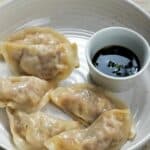
Mandu Recipe
Ingredients
- 80 mandu dumpling skins
- 1 pound pork belly or pork shoulder, ground
- 4 garlic cloves minced
- 1 teaspoon peeled ginger minced
- 1 tablespoon soy sauce
- 1 teaspoon ground black pepper
- 1 tablespoon toasted sesame oil
- 1 teaspoon kosher salt
- 2 ounces dangmyeon sweet potato starch noodles
- 12 to 14 ounces of mung bean sprouts
- 1 pound firm tofu
- 1 cup kimchi chopped finely
Instructions
Cook the Pork
- Heat a large skillet over medium-high heat and add the ground pork. Cook for about 1 minute, stirring with a wooden spoon.
- Add the garlic, ginger, soy sauce, and black pepper. Continue to cook, stirring often, until the pork is fully cooked—about 3 to 4 minutes.
- Take the skillet off the heat, stir in 1 teaspoon of sesame oil, and transfer the pork to a large mixing bowl.
- In a separate bowl, combine the kimchi and salt. Mix well and let sit for 10 minutes to draw out moisture.
Cook the Noodles and Add the Chives
- Bring a large pot of water to a boil. Add the starch noodles and cook for 7 to 8 minutes, or until tender.
- Drain the noodles, but save the hot water in the pot.
- Rinse the noodles under cold water, drain thoroughly, and chop them into small pieces.
- Add the chopped noodles and Asian chives to the bowl with the pork.
Blanch the Mung Bean Sprouts
- Reheat the reserved water and bring it back to a boil.
- Blanch the mung bean sprouts for 1 minute, then drain and rinse them with cold water.
- Squeeze out any excess water and add the sprouts to the filling mixture.
Prep the Kimchi
- Take the kimchi and squeeze out any liquid.
- Add it to the bowl of filling.
- Add Tofu and Season the Filling
- Wrap the tofu in a clean cotton or cheesecloth. Squeeze out the moisture and crumble it into the bowl.
- Season the entire filling mixture with 1 teaspoon salt, ½ teaspoon ground black pepper, and 2 teaspoons sesame oil. Mix everything together thoroughly.
Assemble the Mandu
- Set up a small bowl of water for sealing and line a large tray or baking sheet with parchment paper or plastic wrap.
- Take one dumpling wrapper and place it in your palm. Dip your finger in the water and moisten the edges of the wrapper.
- Spoon a heaping tablespoon of filling into the center. Fold the wrapper in half and press the wet edges to seal.
- Place the sealed dumpling on the tray.
- Repeat with the remaining wrappers and filling, making sure the dumplings don’t touch each other on the tray.
Freeze for Later
- Freeze the assembled dumplings for at least 4 to 5 hours, or overnight.
- Once frozen solid, transfer them to freezer-safe zipper bags for long-term storage.
- When you’re ready to use them, let them thaw in the refrigerator for a few hours before cooking.